Introducing the Amoy Testnet for Polygon PoS
After hearing from the community, the Amoy testnet for Polygon PoS is being launched, a second testnet that provides a low-stakes environment to build, test, and break things.
Amoy will use Ethereum’s Sepolia testnet as the root (L1) chain. Developers deploying on Amoy can continue to count on the availability of essential validators, infra, faucets, tooling, and more, in a sustainable and future-proof environment.
Here’s a brief rundown of questions you might have about this launch.
Wait, what’s happening?
New testnet, new state, new vibes. Welcome, Amoy!
But why though?
The beloved and widely used Mumbai testnet for Polygon PoS uses Ethereum’s Goerli testnet as its root chain. This means Mumbai counts on Goerli for block production.
But Goerli is currently scheduled for deprecation, by the end of Q1 2024, with major RPC providers planning to pull support. Although the exact timing isn’t known, the writing is on the wall.
No Goerli = broken Mumbai. The community consensus across the Polygon ecosystem has been to deprecate Mumbai in tandem with Goerli.
When Goerli goes dark, so will Mumbai.
(Which, by the way, is what Ethereum alignment looks like!)
So, for a little while, there will be two testnets for Polygon PoS?
Yes! Both the Mumbai and Amoy testnets will operate independently, for an indefinite period of time, ensuring a smooth transition for users and developers for whenever Goerli is deprecated.
Like Ethereum, Polygon PoS will be, for a while, a multi-testnet chain.
What are you waiting for? Connect to Amoy and begin deploying today:
- Network Name: Polygon Amoy Testnet
- New RPC URL: https://rpc-amoy.polygon.technology/
- Chain ID: 80002
- Currency Symbol: MATIC
- Block Explorer URL: https://www.oklink.com/amoy
- Faucet: https://faucet.polygon.technology/
Want to discuss the best ways to shape the Polygon ecosystem? Find more details about how to contribute to Polygon Protocol Governance Calls here, or head over to the Polygon governance forum to participate in the conversation.
And make sure to tune into the blog and our social channels to keep up with the latest.
Together, we can build an equitable future for all through the mass adoption of Web3.
How to Get Polygon zkEVM Testnet Tokens
Discover how to obtain Polygon zkEVM testnet tokens securely through trusted faucets. Our guide covers steps to get you started, plus reliable alternative sources.

Antony Bianco
Head of Research
Last Updated
January 13, 2024
Fact Checked
Share With
Or share with link
Thank you! Your submission has been received!
Oops! Something went wrong while submitting the form.
Link copied to clipboard
Summary: If you’re a developer interested in exploring Polygon zkEVM, a layer 2 scaling solution for Ethereum, you’ll need testnet tokens. These can be securely acquired from the official Polygon Faucet, which provides 0.1 ETH every 24 hours, or the QuickNode zkEVM Testnet Faucet. These tokens are essential for deploying and testing smart contracts on this innovative network.
Content Guide
Daily Newsletter & Research ��️
Get the daily newsletter keeping 200,000 investors ahead of the market.
Your email been received!
Please double check your email address.
Can I Get Polygon zkEVM Testnet Tokens?
Indeed, acquiring Polygon zkEVM testnet tokens is feasible through recognized distribution platforms. Initially, connect your MetaMask wallet to the Polygon zkEVM network. Subsequently, navigate to a validated Polygon zkEVM token distribution site and adhere to their guidelines to receive your tokens. These tokens are beneficial for experimenting with innovative smart contracts or decentralized applications on the Polygon zkEVM platform. After completing the necessary procedures, the testnet tokens should appear in your MetaMask wallet promptly.
How to Get Polygon zkEVM Testnet Tokens

For testing or deploying contracts on Polygon zkEVM, it’s essential to obtain testnet tokens from a credible source. Our detailed evaluation recommends the official Polygon Faucet as the most secure source for zkEVM ETH, which is necessary for network transactions. Remember, these test tokens have no real-world value; they are mainly for developers to test smart contracts before mainnet deployment. Here’s a simple guide to get started:
- Visit the Polygon Faucet: Go to the Polygon zkEVM Faucet and enter your wallet address to receive testnet tokens.
- Connect to Discord: Click the purple button to link your Discord for identity verification and collect tokens.
- Complete Verification: Follow the steps on Discord to verify your identity.
- Token Receipt: Your tokens will be processed and sent to your wallet, typically within two minutes.
What is the Faucet Limit?
The Polygon Faucet for zkEVM testnet provides 0.1 ETH to users every 24 hours, allowing them to experiment with the testnet’s capabilities. Unlike some faucets that may allow extra allocations through identity checks, the Polygon Faucet sticks to a one-time daily allocation. To get more ETH, you’ll need to wait another 24 hours to pass. This restriction is in place to maintain equitable access for all users interested in engaging with the zkEVM testnet and its various features.
Alternative Faucet for Polygon zkEVM Testnet Tokens
If you’re a developer seeking to enhance your supply of Polygon zkEVM testnet tokens, there is one alternative faucet we strongly recommend, the QuickNode zkEVM Testnet Faucet. This platform stands out as a particularly trustworthy and reliable source for acquiring testnet ETH directly to your Polygon zkEVM wallet and address. Utilizing QuickNode can enable you to conduct more extensive and meaningful tests on the zkEVM.
About Polygon zkEVM
Polygon zkEVM is a cutting-edge layer 2 scaling solution that aims to make Ethereum more accessible and efficient for everyone. It leverages zero-knowledge proofs (ZK proofs) to drastically reduce transaction costs and enhance throughput, all while inheriting Ethereum’s layer 1 security features. One of its key advantages is its Ethereum equivalence, which means that the majority of existing Ethereum-based smart contracts, developer tools, and wallets can operate seamlessly on Polygon zkEVM. This enables developers to focus on improving existing code rather than rewriting it, making it a viable solution for those looking to scale their Ethereum projects effectively.

Bottom Line
In conclusion, obtaining Polygon zkEVM testnet tokens is a straightforward process that enables developers to thoroughly test and deploy smart contracts or decentralized applications within the zkEVM environment. Whether you choose the official Polygon Faucet or the QuickNode zkEVM Testnet Faucet, both provide a secure and reliable means of acquiring testnet ETH, essential for transactions on the network. Keep in mind the daily limits set by the faucets to ensure fair access for all users.
How to Get Polygon Testnet Tokens
Summary: Developers and enthusiasts delving into the Polygon testnet can turn to faucets such as QuickNode for vital testnet tokens. These tokens are imperative for experimenting with applications and launching smart contracts. With a daily allocation of 0.001 MATIC, QuickNode distinguishes itself as a reliable source within the diverse blockchain landscape, catering to various developmental requirements on Polygon.
Best Polygon Testnet Faucet
5.0 out of 5.0 by Datawallet
QuickNode stands out as the top faucet platform for Polygon due to its reliable, user-friendly service that significantly enhances development and testing efficiency on the network.
Supported Faucets
Polygon Mumbai, Polygon zkEVM, Ethereum, zkSync + 20 more.
24/7 support team for developers and users.
0 fees to acquire free MATIC from the Polygon faucet.
Content Guide
Daily Newsletter & Research ��️
Get the daily newsletter keeping 200,000 investors ahead of the market.
Your email been received!
Please double check your email address.
Can I Get Polygon Testnet Tokens?
Yes, acquiring Polygon testnet tokens is feasible through recognized crypto faucet services. First, you must link your MetaMask wallet to the Polygon testnet network. Subsequently, navigate to a dedicated Polygon faucet for Mumbai or any other testnet and adhere to the instructions to receive your tokens. These tokens play a crucial role in experimental activities, facilitating the exploration and development of smart contracts and decentralized applications within the Polygon ecosystem.
How to Get Polygon Testnet Tokens
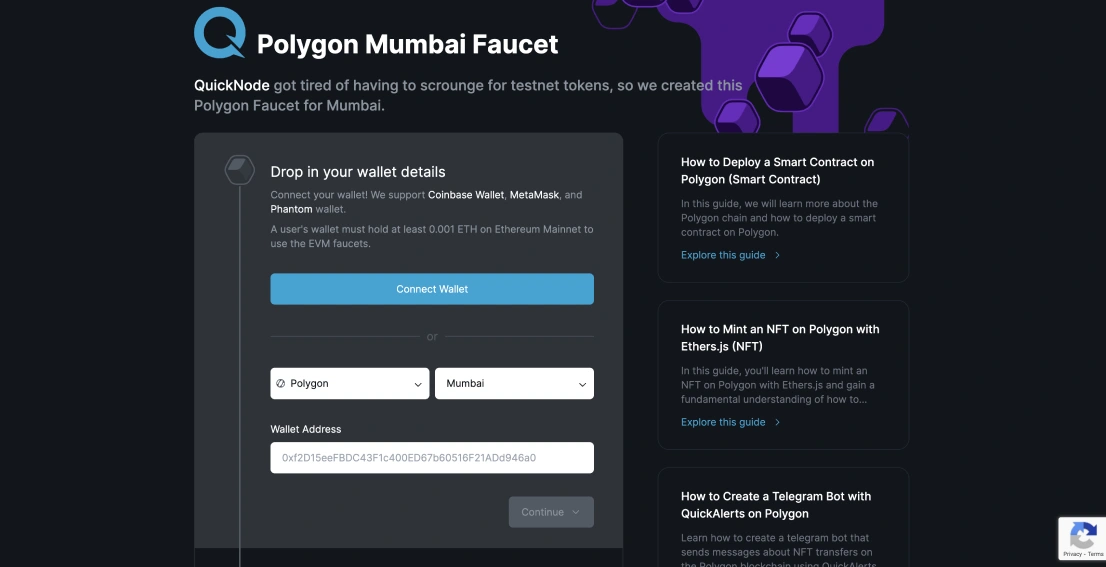
- Visit the QuickNode Faucet and establish a connection with your MetaMask Wallet.
- Utilize MetaMask’s interface to align with the Polygon Mumbai or another chosen testnet, tailored to your requirements.
- Optionally, enhance your balance of Polygon testnet tokens by participating in QuickNode’s social media activities.
- Conclude the process, and the tokens will be transferred to your MetaMask wallet immediately.
By adhering to these steps, you will be adequately prepared with Polygon testnet tokens, setting you up for effective experimentation and development on the Polygon framework.
Polygon Faucet Daily Limit
QuickNode’s Polygon layer 2 faucet provides a daily allocation of 0.001 MATIC, supporting users in network testing and development activities. This limitation is strategically set to harmonize the usage of resources with the requirements of developers, guaranteeing sufficient funds for daily operations such as deploying smart contracts and testing applications. This approach fosters a consistent and productive development environment within the Polygon ecosystem.
Polygon Faucet Alternatives
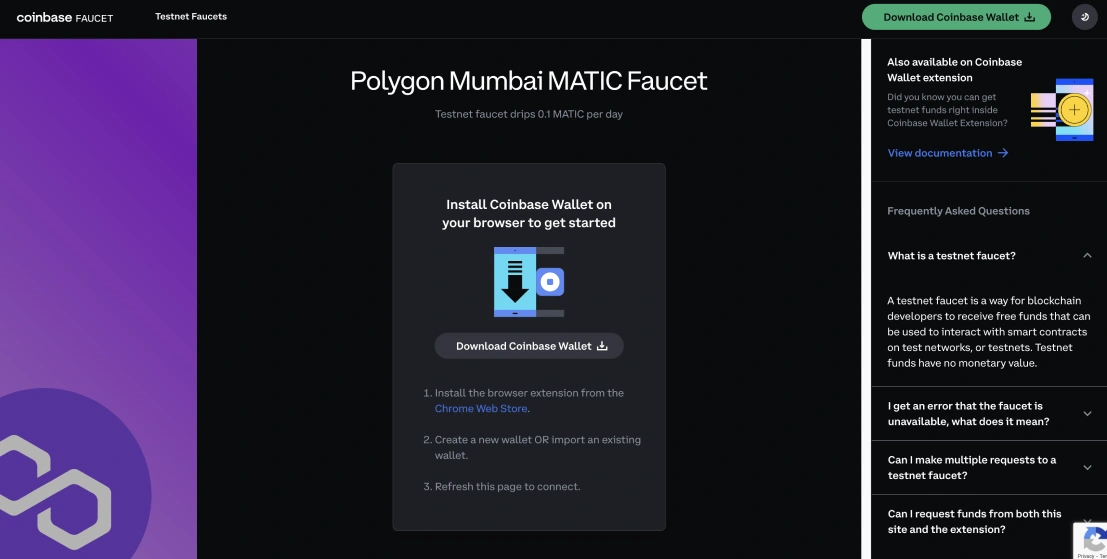
For those in the market for reliable sources of Polygon testnet tokens, Coinbase Faucet and Triangle stand out as trusted crypto faucets. Echoing the service quality of QuickNode, these platforms allocate a daily sum of 0.001 MATIC, maintaining a consistent supply for user needs.
This uniform distribution across different trusted crypto faucets ensures that developers and testers have uninterrupted access to the necessary resources for their projects on the Polygon testnet. Known for their dependability, Coinbase Faucet and Triangle are integral in creating a stable and supportive development environment in the Polygon ecosystem.
Bottom Line
In conclusion, the availability of Polygon testnet tokens through trusted crypto faucets like QuickNode, Coinbase Faucet, and Triangle is pivotal in the blockchain development community. These services provide not only the essential resources for developers and enthusiasts to test and refine their applications and smart contracts but also ensure a stable and supportive environment for innovation on the Polygon network.
How to Get Polygon Testnet Tokens
Learn how to obtain Polygon Testnet tokens from the official faucet and explore alternatives like QuickNode. Dive into Ethereum’s Layer 2 testing platform.

Scott Richards
Markets Analyst
November 5, 2023
Last Updated
Fact Checked
Bottom Line: Polygon Testnet tokens can be easily obtained through the network’s official Polygon Testnet Faucet and alternatives such as Coinbase, QuickNode, and the Mumbai Faucet. The Polygon Testnet is deployed on Mumbai and Ethereum Goerli, with Mumbai being the more popular environment for testing on the Ethereum Layer 2 platform.
Regulators:
Get Started
Make a secure transaction through the verified website URL.
Table Of Content
How to Get Polygon Testnet Tokens from Faucet
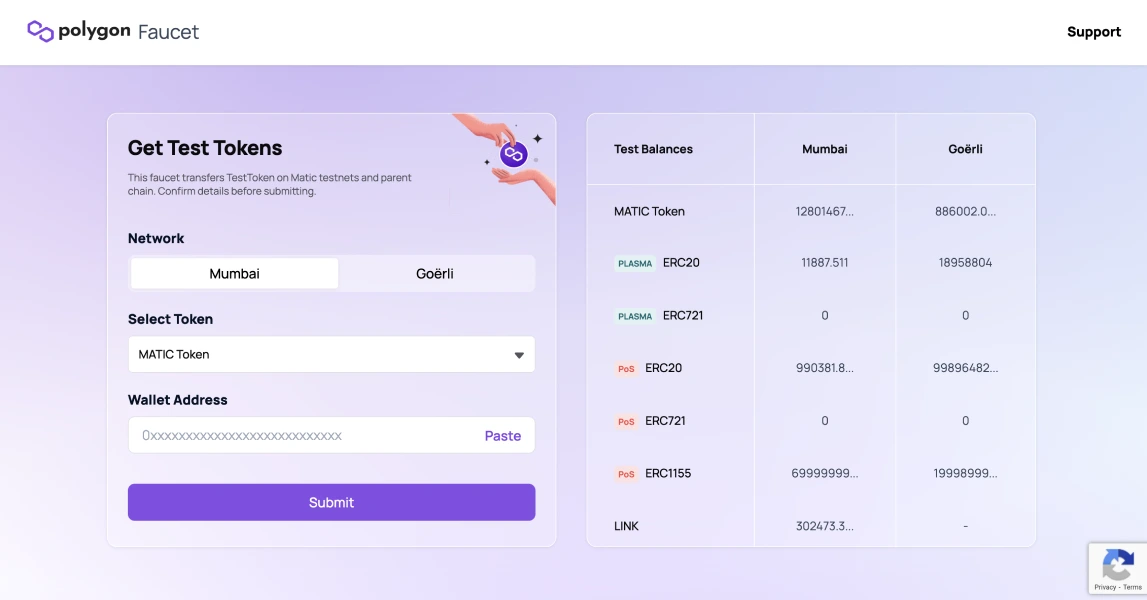
The most secure and simple way of obtaining Polygon Testnet tokens is through the official Polygon Testnet Faucet. This interface enables users to smoothly integrate their web 3 wallets like MetaMask, and request for testnet MATIC, ETH, or LINK coins on Polygon without incurring any charges. Begin integrating with the network by following this short guide:
- Visit the official Polygon Testnet Faucet.
- Link your MetaMask or any other Web3 wallet.
- Choose ‘Polygon Mumbai Testnet’ or ‘Polygon Goerli Testnet’ as the testnet you want the tokens on.
- Click ‘Continue’ to complete the transaction, and tokens will land in your Polygon Testnet wallet in under 5 minutes.
Alternative Polygon Testnet Token Faucets
To acquire more Polygon Testnet tokens, you can link your wallet to various alternative faucets. While the official Polygon Testnet Faucet remains highly recommended, our research indicates that Coinbase, QuickNode, and the Mumbai Faucet serve as excellent alternatives for both developers and users seeking additional testnet MATIC.
What is the Polygon Testnet?
The Polygon Testnet, comprising the Mumbai and Goerli versions, is a Layer 2 solution built to enhance Ethereum’s scalability. It serves as a reliable platform for developers to assess and troubleshoot their decentralized applications (dApps) safely before initiating them on the primary Ethereum network. The Polygon Testnet bundles transactions off-chain, submitting a single cryptographic proof to the Ethereum mainnet, which considerably amplifies transaction rates and diminishes costs, thus addressing Ethereum’s scalability challenges.
Functioning in a similar vein to the Ethereum Testnet, it uses «test tokens» instead of real assets. This enables developers to explore and validate their dApps’ functionality without the risk of losing actual funds. The Polygon Testnet provides these tokens free of charge through its faucet system, granting developers the ability to execute thorough tests and simulations.
The Bottom Line
To sum it up, obtaining Polygon Testnet tokens is a straightforward process, with the official Polygon Testnet Faucet providing easy access. By using this faucet, users can link their wallets and quickly receive testnet MATIC, ETH, or LINK, allowing them to test and troubleshoot their dApps on the Polygon Testnet, a Layer 2 scalability solution for Ethereum. This paves the way for developers to safely experiment and refine their applications without risking actual funds, effectively tackling Ethereum’s scalability problems, and promoting enhanced blockchain development.